


DUI Checkpoints in Nashville: Locations, Legal Issues, and How Cases Are Challenged

Law enforcement throughout Nashville uses DUI checkpoints to keep the roads safe from impaired drivers. After having a drink or two, it can be very scary to be stopped at one of these checkpoints, and despite what police officers may tell you, you still have rights. It is important to understand your rights when stopped at DUI checkpoints in Nashville.
With over eight years of experience providing superior defense strategies to hundreds of clients in the greater Nashville area, the Law Office of Cesar Arbelaez is here to help you if your rights have been violated at a DUI checkpoint. Our lead attorney has a reputation for helping clients receive favorable outcomes when it comes to their DUI cases.
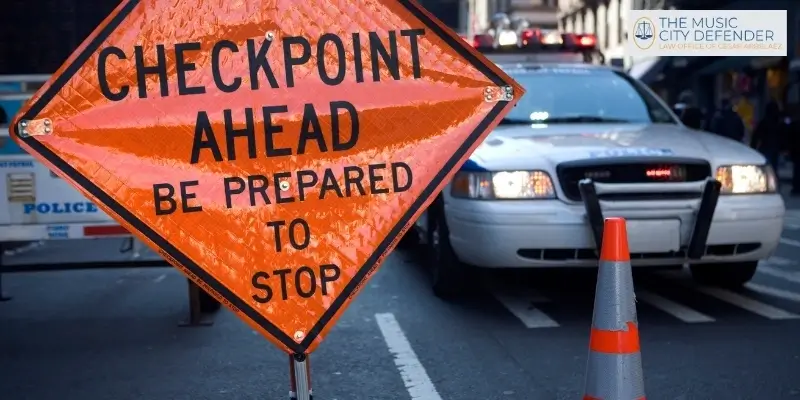
What Are DUI Checkpoints?
Both the city of Nashville and Tennessee law enforcement agencies use DUI checkpoints as a way to circumvent the need for probable cause to stop drivers for sobriety tests. In Tennessee, law enforcement officers are allowed to set up DUI checkpoints at a predetermined location to check whether drivers are impaired.
It is important to understand your rights and the rules governing these checkpoints to make sure law enforcement does not violate your rights during a checkpoint stop. DUI checkpoints are often set up along busy roads, high-traffic, or high-risk areas. They most often are on weekends and holidays when law enforcement expects drivers to be drinking. In Nashville, DUI checkpoints are most often in these locations:
- Downtown Nashville
- Broadway near the honky-tonks
- Interstate exits and major roads
- Near event venues and stadiums
- Weekend nightlife areas
Expect to see checkpoints during holidays such as New Year’s Eve, Christmas, 4th of July, Memorial Day, Labor Day, Thanksgiving, and Halloween. They will also be set up around local events where alcohol is served, such as sporting events and CMA Fest.
What to Do if You Are Stopped at a DUI Checkpoint?
If you are stopped at a DUI checkpoint in Nashville, TN, the most important thing you can do is remain calm and follow the instructions given by law enforcement. The officer will ask to see your driver’s license, registration, and proof of insurance.
They may ask if you have been drinking or using drugs, but you are not legally obligated to answer. If officers have reason to believe that you may be driving impaired, they will ask you to step out of the vehicle and perform field sobriety tests or take a portable breathalyzer test.
During this encounter, law enforcement is looking for signs of impairment such as the smell of alcohol or drugs, slurred speech, visible open containers, or unsteady movements.
Know Your Rights
It is important to know your rights if you are stopped at a DUI checkpoint in Tennessee. You have the right to remain silent; you do not have to answer questions beyond providing the required documents that the officer will ask for.
You also have the right to refuse field sobriety or breathalyzer tests. It is important to understand that even though you have the right to refuse these tests, it may lead to circumstances like the immediate suspension of your license.
If you are arrested for a DUI at a Nashville checkpoint, the ramifications can be serious. Tennessee DUI convictions can lead to fines, license suspension, DUI education classes, ignition interlock devices, and jail time.
It is important to hire a Nashville DUI lawyer right away if you are facing charges. Backed by proven results, our team at the Law Office of Cesar Arbelaez is prepared to help you through this tumultuous process. We know the gravity of these charges and how much is at stake, and we can review your case to see if your rights were violated at any point during the checkpoint stop.
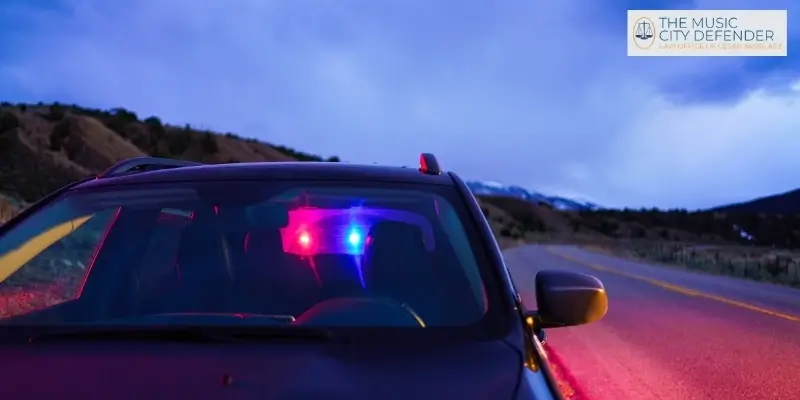
FAQs About DUI Checkpoints in Nashville, TN
Can You Refuse a DUI Checkpoint in Tennessee?
Yes, you can refuse sobriety tests at a Tennessee DUI checkpoint. It is also legal to turn away before entering a checkpoint if you see it and can do so safely. Officers do watch for evaders and may still stop you under suspicion of trying to avoid the checkpoint. During the checkpoint stop, you are required to provide documentation, but you have the right to remain silent.
Where Are DUI Checkpoints Legal in Nashville?
DUI checkpoints are legal throughout Nashville and Tennessee and often appear in high-traffic areas during major events or holidays. These checkpoints are common along high-traffic roadways like exits along I-24 and near Downtown Nashville.
These checkpoints are designed to catch DUIs before they cause a crash. According to the Department of Safety & Homeland Security, 1 out of 3 fatal crashes involved a DUI in Tennessee.
How Are DUI Checkpoints Legal Without Probable Cause?
DUI checkpoints are legal in Tennessee despite having probable cause because in the U.S. Supreme Court case Michigan v. Sitz, it was ruled that public safety outweighs the minimal intrusion on drivers. This case offered states the ability to help prevent drunk driving by operating these checkpoints.
Checkpoints must give advance public notice and are often posted on law enforcement websites or Facebook pages. These checkpoints must also treat all drivers similarly with structured procedures.
Can Police Search Your Car During a DUI Checkpoint in Nashville?
Law enforcement can search your vehicle if they have probable cause to believe a crime is being committed. Probable cause can include smelling alcohol or drugs, or seeing open containers or drug paraphernalia. If you do not consent to the search, it is important to state clearly to law enforcement that you do not consent. A search is only allowed if you consent and there is probable cause.
Hire a DUI Lawyer – The Music City Defender
Being stopped at a DUI checkpoint can be scary. It is important to know your rights and prepare yourself by staying up to date about where and when law enforcement will be conducting these checks. If you believe your rights were violated at a Nashville DUI checkpoint, our team at the Law Office of Cesar Arbelaez is prepared to review your case and investigate law enforcement procedure during this stop. Contact our office today for a consultation.

© 2026 The Law Office of Cesar Arbelaez • All rights reserved
*Images are obtained under license from Canva and other third-party stock image providers, with attribution included where required.
Digital Marketing By 
 EN
EN  ES
ES